WHEN LOVE TAUGHT ME TO DISAPPEAR
Share to:

Photo Credit: Hameen Reynolds
Content Warning:
This post discusses emotional abuse, manipulation, childhood trauma, substance use, and medical manipulation. Please read with care.
Disclaimer:
This is a personal account of my experiences, written from my perspective and memory. Names and identifying details have been changed or omitted to protect privacy. This is not intended to defame any individual, but to share my healing journey and help others recognise unhealthy patterns in their own lives.
I was sixteen when police packed my things into their car and told me I couldn’t live there anymore. When I called to check in later, I was screamed at, called selfish and an asshole – because someone had nearly died and I didn’t even know.
That was normal. That was love.
Before that, I’d been chasing approval from the other side of the world.
At fourteen, I moved across the globe to chase a relationship I would never have.
I didn’t know then that I was desperate to be wanted. To matter. To finally be enough.
Three days into my new school, I got lost trying to get home. I called from an ice cream shop. The voice on the other end sounded irritated then reluctantly agreed to pick me up.
I waited at the beach under a palm tree until 11pm. Fourteen years old. New country. Alone in the dark. And the police had been searching for hours.
I was terrified.
Not just of the dark or being lost. Afraid that I had done something wrong. That my need for help was an inconvenience. That I was too much trouble.
I didn’t know I wasn’t safe yet. I just knew that for the first time, I felt unsafe.
So I shrank. I asked for nothing.

Photo credit: Fethi Benattallah
What I Learned About Asking for Help
I left home at sixteen with nothing. I moved between places, never had stability and lived week to week.
Whenever I needed help – I’d call.
The pattern was always the same.
Yell. Hang up. Ring back. Yell. Hang up. Ring back. Guilt. Make me feel terrible for asking in the first place. Hang up.
Then call back. Apologise. Give me more than I asked for.
Every single time. For decades.
I didn’t understand then that this was a nervous system managing its own overwhelm. That having needs triggered something unbearable – maybe shame, maybe fear, maybe the memory of not having enough themselves. I just felt the weight of it. The belief that asking for help made me a burden.
It kept me hooked. It kept me dependent. Love was withholding, then rescuing. Pain, then relief. The relief felt like love because the pain made me so desperate for it.
To this day, I’m uncomfortable asking for help. When I receive it, I feel like I owe the person. I’m getting better. But the belief that I don’t deserve help runs deep.
Someone raised with scarcity might genuinely struggle when asked to give. Yelling and hanging up might have been the only way a dysregulated nervous system knew how to cope with the shame of not having enough, or the fear of being used.
I was a child. I needed food. That shouldn’t have required me to absorb someone else’s pain.
“Love was withholding, then rescuing.”
What I Learned About My Body
I was raised to believe I was fragile. Always sick. Always needing protection.
Every headache became something serious I needed screening for. I was told conditions were hereditary, that I had them too. Medical authority was used to instil fear, to make me believe I couldn’t interpret my own body, my own health, my own reality.
Even now, medical information gets sent. Creating urgency. Bypassing boundaries. The same playbook, decades later.
I can hold compassion for that. And I can also refuse to let my body be the site of someone else’s need for purpose.
What I Learned About Safety
Don’t hike. It’s dangerous.
Don’t camp. It’s dangerous.
Don’t go anywhere alone. It’s dangerous.
People are dangerous.
I was told the world wasn’t safe. That I needed protection.
I believed it. I felt it in my bones. The world felt hostile, unpredictable, full of threats I couldn’t see but had to prepare for.
But I was being taught I was too fragile to survive and at the same time the danger was being created around me.
The world wasn’t the threat. The fear was the control.
It wasn’t just the world that was dangerous. It was also the people I chose. Subtle comments about my friends, my partners, my decisions. Never direct accusations but just enough doubt planted to make me question everyone around me.
The world felt dangerous because I was being taught that everyone in it – except the person teaching me – couldn’t be trusted.
The isolation kept me dependent. The fear kept me small. And I deserved to learn to trust my own judgement.

Photo credit: Shadow Cage
What I Learned About Connection
Alcohol ran through generations. I was raised with it. Identity was fused with it.
I was brought up to be a drinking companion. For the first half of my life and well into my mid-thirties – when I had emotional experiences, I was handed a substance.
Connection meant drinking together and emotions meant alcohol. Sobriety meant separation.
By the time I was in my thirties, I didn’t know how to feel without drinking. That wasn’t my fault. That was my training.
When I finally stopped, I had to learn emotional regulation from scratch – while living in an unstable environment, at an age when most people have been practising it for twenty years.
I didn’t get the ability to sit with my own feelings, the knowledge that emotions pass, or the belief that I was strong enough to survive my own sadness.

Photo credit: Михаил Секацкий
The Versions of Me
I was a tomboy. I wore my own clothes. But I was publicly shamed for it – told in front of others that I was wearing hand-me-downs. I wasn’t. They were mine.
That was deeply embarrassing.
I felt exposed. Humiliated. Like I’d done something shameful just by being myself.
After the shaming came the ‘rescue’ – clothes I didn’t choose, presented as gifts. I never had a choice.
I came out twice.
In my early 20s: ‘I think you’ve just been around it too much.’
Ten years later, I spoke my truth: ‘No. You just don’t want me to be.’
I was erased before I even had a chance to exist.
I felt invisible. Like the person I actually was didn’t matter. Like my only value came from being who someone else needed me to be.
I was kept dependent emotionally, but leaving home young forced me to become hyper-independent practically. I learned life skills the hard way, but some things – like financial stability – I didn’t figure out until much later.
‘You’re just like me. We’re the same.
But only when I complied. Only when I reflected back what was needed.
When I did something that wasn’t approved of, the message changed: ‘You’re not like me.’
I didn’t have a stable sense of self. I had personas. I learned to read the room, sense what was needed, become it.
I was paraded around – ‘Look everybody, here’s my daughter’ – not as a person, but as an achievement.
I felt like an object. Like my purpose was to be evidence of someone else’s worth.
Every Christmas, depression would descend. I would go out of my way to try and help – buy a tree, set it up as a surprise. Whenever sadness appeared, I’d run around trying to make it better.
I felt responsible for everyone’s happiness. And I felt like a failure when I couldn’t fix it.
I understand now that someone who was parentified themselves – managing everyone’s emotions as a child – might pass that role to their own child. Someone whose identity was conditional, who was only valued when performing a certain role, might repeat that pattern. Needing me to manage feelings, controlling how I looked, who I loved, who I was allowed to be might have come from their own fear of rejection. Their own belief that authenticity wasn’t safe.
I can see the generational wound. And I can also refuse to pass it on.
What I Had to Grieve
I was told I was remembering wrong, that I was blaming people for things that didn’t occur.
I was told one version of events. I knew another. The dissonance was unbearable.
I felt like I couldn’t trust my own memory, like maybe I was making it all up and I was the problem.
I had to grieve the safe, loving relationship I would never have, and the apology I would never get.
That grief was heavy. It still is.
I understand now that someone who can’t face their own actions might genuinely believe a different version of events. That rewriting history might be the only way a fragile sense of self can survive. That denial isn’t always conscious – sometimes it’s protection.
I now trust what I know. My memory. My experience. My truth.

Photo : Mobile Phone
I set a boundary once. Said the overstaying needed to end, that the drinking had become unbearable. The response was getting drunk and calling people, painting me as cruel for asking.
I felt ashamed. Guilty. Like I was abandoning someone who needed me. Like setting a boundary made me a terrible person.
I was used to being the villain in stories. I still am, probably.
But I still held my boundary
It wasn’t contained to one relationship. The pattern was generational. The same language, the same tactics, repeated over and over.
I was raised the same way those before me were raised. Wounding doesn’t live in one person. It lives in patterns that get passed down until someone decides to break them.
What Disorganised Attachment Looked Like
I learned to be whoever was needed.
Attachment theory talks about three main styles: anxious, avoidant, and disorganised.
Anxious attachment seeks reassurance, fears abandonment, protests separation.
Avoidant attachment distances under stress, values independence, dismisses needs.
Disorganised attachment approaches and withdraws simultaneously, can’t regulate consistently because the source of comfort is also the source of threat.
I didn’t fit neatly into anxious or avoidant. I had disorganised attachment – but not in the way it’s typically described.
I could be anxious, avoidant, or caught in the contradiction between both, depending on what the situation required. My nervous system learned to read the environment and adapt automatically. I didn’t choose which persona showed up – it just did.
I chased approval across oceans. I bought Christmas trees to fix the sadness around me. I ran around doing everything, trying to earn love by being useful.
That was anxious.
I slept on a ledge jutting from a cliff at the beach because it was more peaceful than home. I ran away at night and no one even noticed I’d left. I withdrew when I was told I wasn’t like them, when my authentic self was rejected.
That was avoidant.
I waited under a palm tree at fourteen, needing protection, feeling like I wouldn’t get it. I developed hyper-independence and codependence simultaneously when I was removed from home by the police – I was unable to ask for help, and unable to function without enmeshment.
That was disorganised.
Disorganised attachment made me incredibly adaptable. It made me good at holding space for complexity, at reading people, at surviving. It also made me exploitable.
“You will have to give up the rest of your life”
Why I Kept Choosing It
I kept choosing chaos because chaos felt normal.
I didn’t know stability was an option. I thought it was a myth.
I attracted people who cycled tactics – who love-bombed, then withdrew, then breadcrumbed. Who overwhelmed me with intimacy when I needed space, then used my withdrawal as punishment. Who created chaos, offered stability, then removed it.
My nervous system sought familiarity – even when familiarity was harmful.
A highly manipulative person once told me that the environment I grew up in was the best they had ever seen. At the time, I didn’t understand what that meant.
Now I do.
I repeated the pattern of self-abandonment because it felt familiar. I chose chaos over stability because I didn’t know how to choose differently yet.
I thought being needed meant being loved. I thought chaos meant passion. I thought self-abandonment meant devotion.
I was the perfect partner for people who cycled tactics – because I’d been trained to match whatever showed up.
Some were wounded and repeating patterns unconsciously. Some understood exactly what they were doing.
And I chose to stay. I enabled the cycle by adapting instead of leaving.
‘You will have to give up the rest of your life’ – that’s what I was told after a crisis that shattered my world.
I had already given too much.
Even well-meaning people reinforced the pattern by treating self-sacrifice as love and obligation as devotion. That belief – that I owed everything – was the same one that kept the cycle alive.
I enabled this dynamic for decades by drinking along, chasing approval, and staying enmeshed.
I didn’t set boundaries until my mid-thirties. I kept choosing people who required me to erase myself because that was the only version of love I knew.
I was conditioned. And I made choices within that conditioning.
I was hurt. And I hurt others by staying in the cycle.
Understanding why I stayed doesn’t erase the impact of staying.

Photo credit: Sandip Karangiya
I started to see that my childhood wasn’t just inconsistent. It was tactical. Affection and withdrawal weren’t random. Rewards and punishments. Love-bombing when compliance was needed. Cold treatment when boundaries were attempted.
I adapted to whichever version showed up to stay safe.
And I kept choosing people who required that same adaptation.
Whether they knew what they were doing or not didn’t change the impact. I was perpetually destabilised. Perpetually adapting. Never finding ground.
What I Know Now
When you name a pattern, some people don’t reflect – they perform. Their warmth suddenly increases. Their generosity amplifies. Public displays of care appear.
It’s not change. It’s damage control.
And it works because it activates every attachment response at once: ‘Maybe they do care’ (anxious). ‘I don’t trust this’ (avoidant). ‘This feels wrong but I can’t pinpoint why’ (disorganised).
The performance is designed to make you doubt what you know. Real change is quiet and consistent. Performance is loud and immediate.
Whether the harm I experienced came from unconscious survival patterns or strategic control, the impact was real. The pattern was real. And survival required me to respond to what was happening, not why it was happening.
Your attachment style isn’t your flaw. It’s your vulnerability.
Anxious attachment can be activated by withholding reassurance, then intermittently providing it. Avoidant attachment can be triggered by overwhelming with intimacy, then punishing withdrawal. Disorganised attachment can be exploited by cycling chaos and stability, keeping you perpetually off-balance.
With disorganised attachment that shifts fluidly between all three responses, the entire toolkit is available.
Attachment literacy is learning to recognise:
- When your attachment system is being deliberately activated, not just triggered by your own wounds
- When someone is cycling tactics, not just being inconsistent from their own wounding
- The difference between ‘I’m anxious because of my pattern’ and ‘I’m anxious because this person is creating instability’
My childhood was training in reading patterns I couldn’t name yet. That’s where my ability to see what was happening beneath the surface came from.
I can have compassion for the pain someone carries and refuse to be the target of how it’s weaponised.
I can understand generational trauma and still choose to break the cycle.
I can acknowledge I was conditioned and take responsibility for my choices going forward.
Ownership may never come from those who harmed me. That’s not mine to control. What is mine is that I participated. I adapted. I survived. And now I’m choosing differently.

Photo credit: Fernando Dantasrangiya
What Healing Looks Like
I’m learning to stay grounded when others are dysregulated.
I’m learning to recognise when someone’s energy is trying to mould me.
I’m learning to choose people who are consistently secure.
I’m learning to communicate my needs without shame. To ask for help without believing I owe everything in return. To say what I want without fear of condemnation. To ask for space when I need it, for closeness when I want it, without believing either is burdensome.
My gift of adaptability remains. My willingness to use it for others’ comfort is gone.
My nervous system didn’t trust peace, because peace felt unnatural.
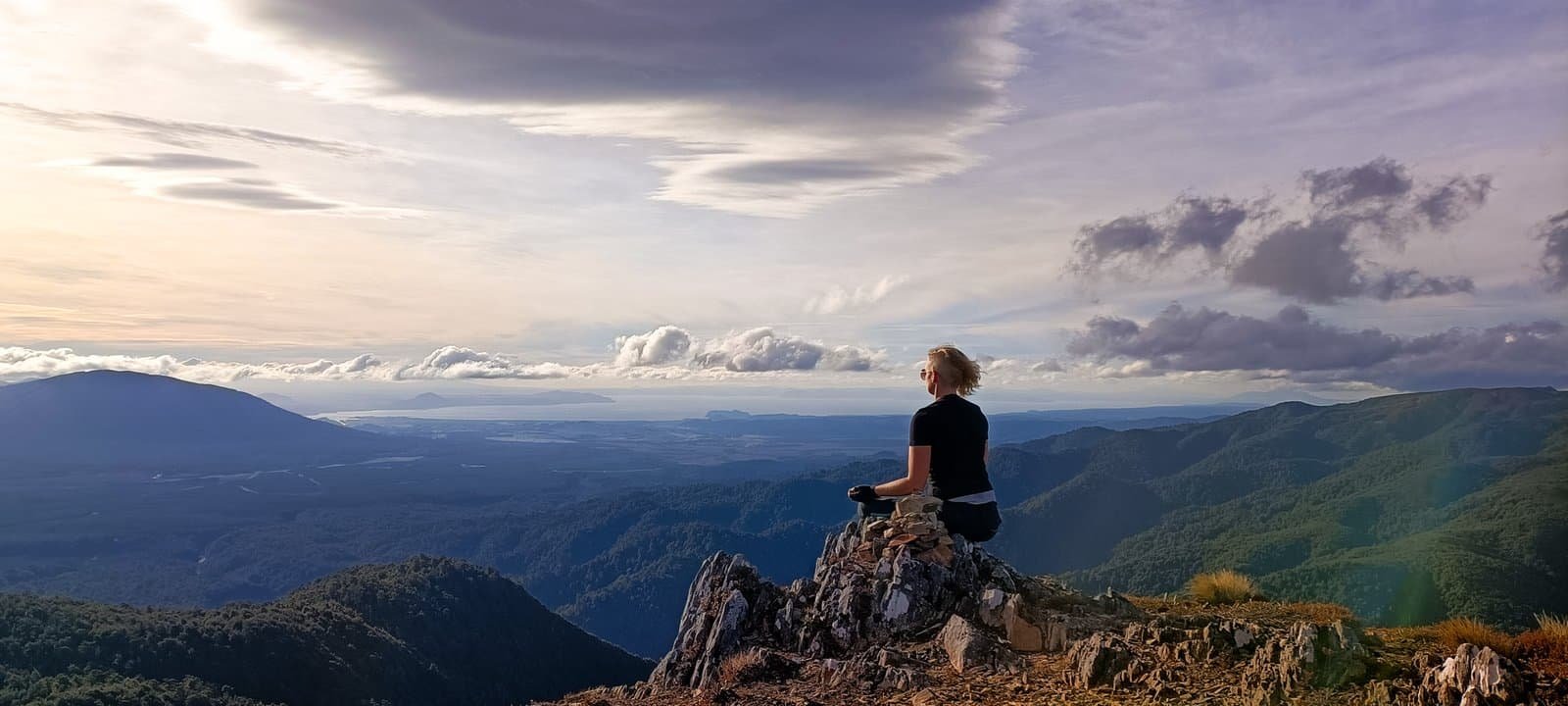
Meditation helped to slow my system down. I didn’t realise how fast my brain was going until it was calm.
Now, I’m working towards earned security. I’m learning that love doesn’t require me to disappear. That I can care deeply without losing myself.
It’s not linear. Some days I trust connection. Some days isolation feels safer. I still pendulate between the two.
But the difference now is my awareness. I can see the pattern and I can choose my response.
Your attachment style developed as survival. If someone is using it for control, that’s weaponisation – not love.
Understanding the difference is survival.
Awareness is the first step to protection.
As a trauma-informed nervous system coach, I share this not as a model of perfection, but as a map of the terrain. Your attachment patterns will have their own signature, their own timeline, their own path back to you. What matters is that you learn to recognise when patterns are being weaponised – and that you give yourself permission to choose differently.
Anna Roters
If you’re ready to understand how attachment patterns
shape your relationships, join us.